




Avatar meaning: what is an avatar?
The word avatāra comes from Sanskrit and means “descent”. It is made up of ava, “down”, and the root tṝ, “to cross, to pass over”. So an avatar is God descending from his world into ours. The article avatar meaning explains where the word comes from.
In Hinduism the idea is linked above all with Vishnu, the preserver in the Trimurti. He comes into the world when the balance threatens to tip. Krishna himself gives the classic reason in the Bhagavad Gita:
To protect the good and destroy the wrongdoers, to establish dharma firmly, I come into being in every age.
| Word | Say it like | Meaning |
|---|---|---|
| paritrāṇāya sādhūnāṃ | pa-ri-traa-naa-ya saa-dhoo-naam | to protect the good |
| vināśāya ca duṣkṛtām | vi-naa-shaa-ya cha dush-kri-taam | and to destroy the wrongdoers |
| dharmasaṃsthāpanārthāya | dhar-ma-sam-sthaa-pa-naar-thaa-ya | to make dharma firm |
| sambhavāmi yuge yuge | sam-bha-vaa-mi yu-gay yu-gay | I come into being age after age |
The verse stands in the Bhagavad Gita (4.8). In English “avatar” today often means a game character, a profile picture or James Cameron's film. Yet the word comes from exactly this religious tradition.
The 10 avatars of Vishnu at a glance
The table shows the ten avatars of Vishnu in the order most texts and temples use. The right-hand column names what each avatar achieves in the story.
| No. | Avatar | Form | Deed |
|---|---|---|---|
| 1 | Matsya | fish | Saves Manu, the sages and the Vedas from the great flood. |
| 2 | Kurma | tortoise | Carries the mountain with which the ocean of milk is churned. |
| 3 | Varaha | boar | Lifts the earth out of the primal ocean and defeats Hiranyaksha. |
| 4 | Narasimha | man-lion | Defeats Hiranyakashipu and protects Prahlada. |
| 5 | Vamana | dwarf | Spans the world in three steps and tames King Bali. |
| 6 | Parashurama | Brahmin with an axe | Punishes the tyrannical warriors. |
| 7 | Rama | prince of Ayodhya | Defeats Ravana and frees Sita. |
| 8 | Krishna | cowherd and prince | Defeats Kamsa and teaches the Bhagavad Gita. |
| 9 | Buddha | teacher | Teaches compassion, according to many texts against blood sacrifice. |
| 10 | Kalki | rider on a white horse | Is to begin a new age at the end of the Kali Yuga. |
The first five avatars: from fish to dwarf
According to tradition the first four avatars belong to the first world age, the Satya Yuga. Vamana follows in the second, the Treta Yuga. Their stories tell of the primal flood, the primal ocean and mighty demons.
- Matsyaa small fish asks King Manu for protection and grows quickly. He warns Manu of the flood and pulls his ship to safety. The story already appears in the Shatapatha Brahmana and in detail in the Matsya Purana.
- Kurmawhile the ocean of milk is churned, Mount Mandara sinks. Vishnu dives beneath it as a tortoise and carries it on his shell.
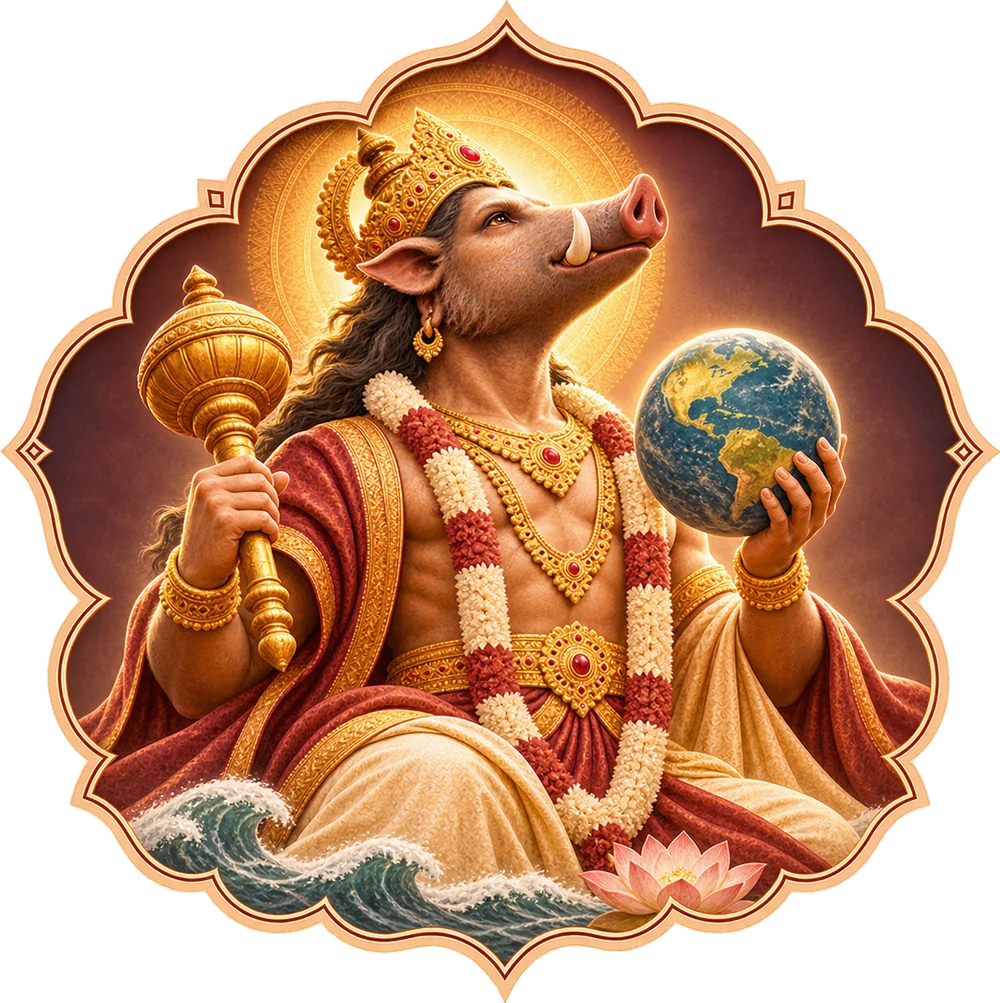
- Varahathe demon Hiranyaksha has dragged the earth into the primal ocean. The boar dives down, defeats him and lifts the earth goddess up on his tusks.
- NarasimhaHiranyakashipu can be killed neither by human nor animal, neither by day nor by night. Half man, half lion, Vishnu defeats him at dusk to save the devout Prahlada.
- Vamanathe dwarf asks King Bali for as much land as he can cover in three steps. Then he grows to giant size and spans earth and sky.
The story of Prahlada lives on in the spring festival Holi. In Kerala the harvest festival Onam recalls King Bali, who may visit his people once a year.
Stories to read
You can read these stories in full here. Each has its own page with its meaning and where it stands in the scriptures.
- Matsya and the flooda tiny fish asks a king for protection. It grows and warns him of the great flood. Read the whole story
- Narasimha and Prahladaa demon king can die neither by day nor by night. His son Prahlada trusts in Vishnu all the same. Read the whole story
- Vamana and Balia dwarf asks a king for three steps of land. Then he grows beyond heaven and earth. Read the whole story
The human avatars: Parashurama to Kalki
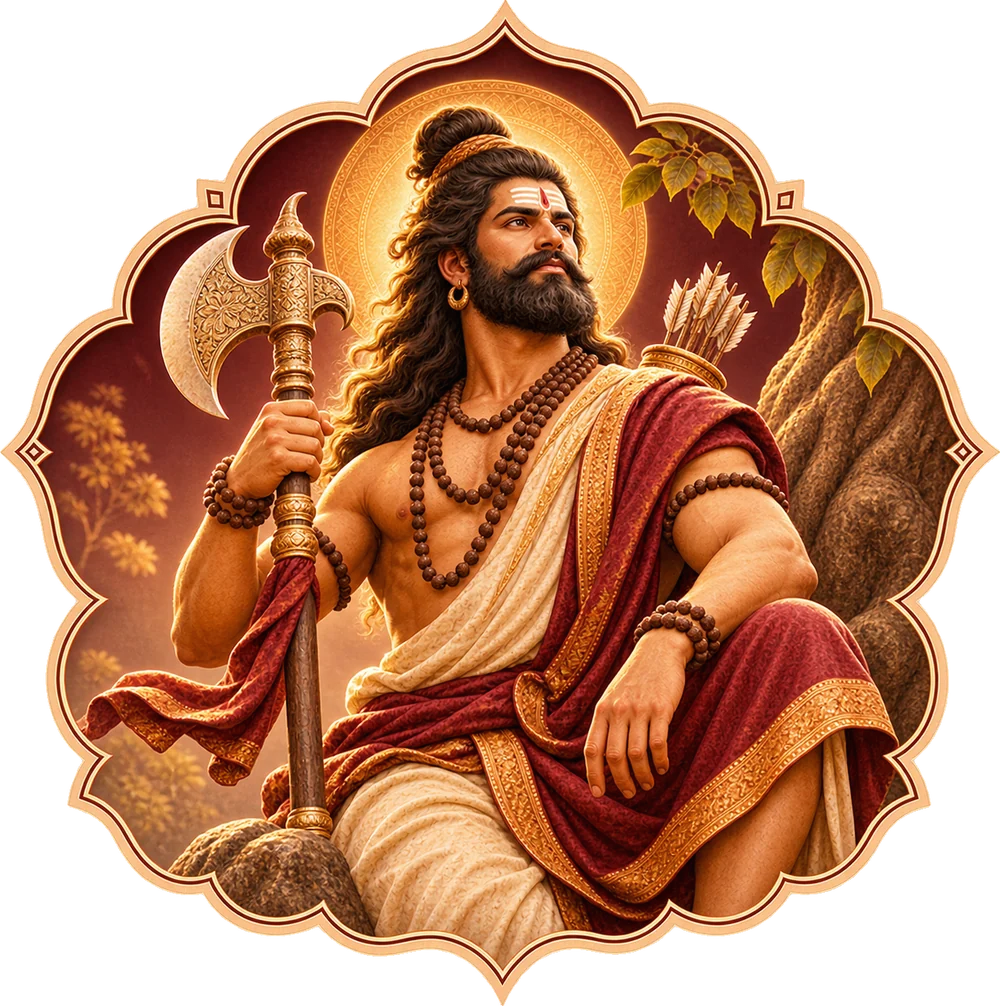
From the sixth avatar on, Vishnu appears in human form. Parashurama, “Rama with the axe”, is a Brahmin and a warrior. He avenges the murder of his father and punishes the warrior caste that abuses its power.
The two most loved avatars follow. Rama is the hero of the Ramayana and the model of a just king. Krishna is the cowherd of Vrindavan and the teacher of the Bhagavad Gita. Both are worshipped in their own temples and with their own festivals.
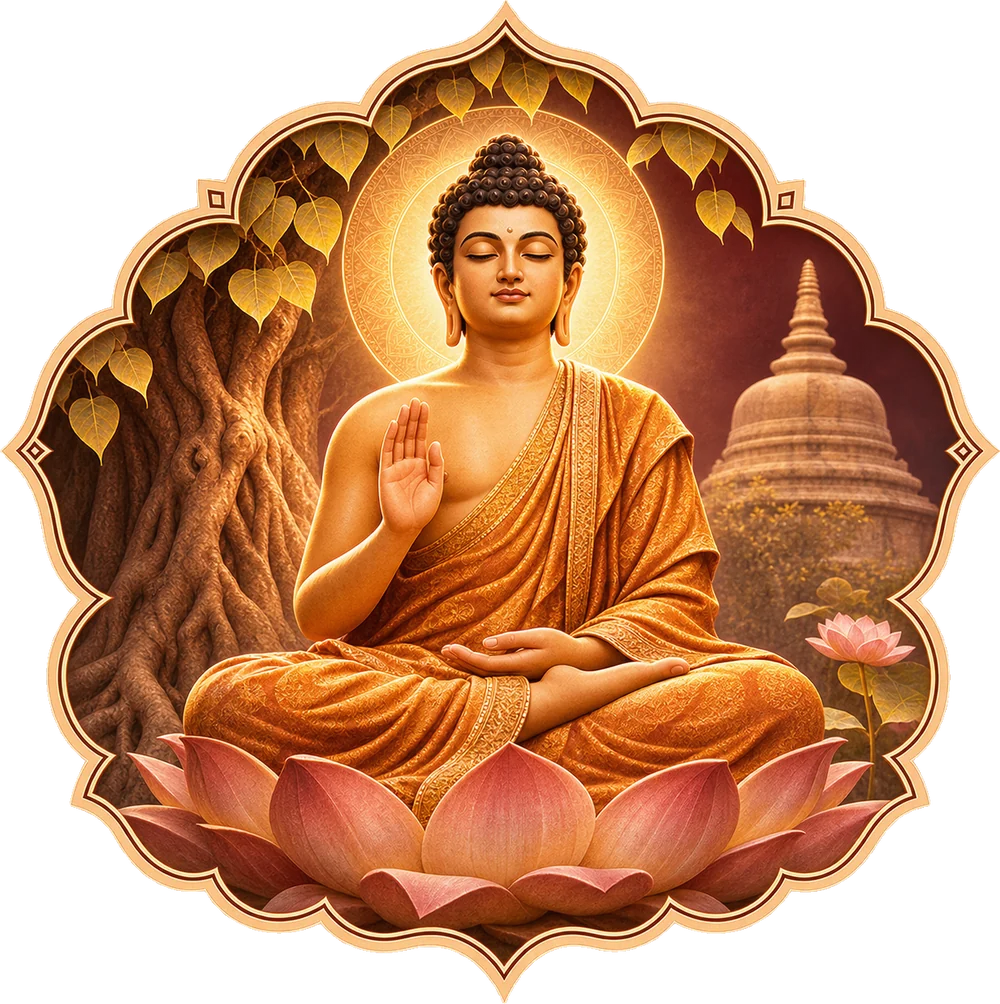
In most lists the ninth avatar is the Buddha. The Puranas interpret him in different ways. In Jayadeva's Gita Govinda from the 12th century he stands for compassion with animals. Buddhists themselves do not see the Buddha as an avatar of Vishnu.
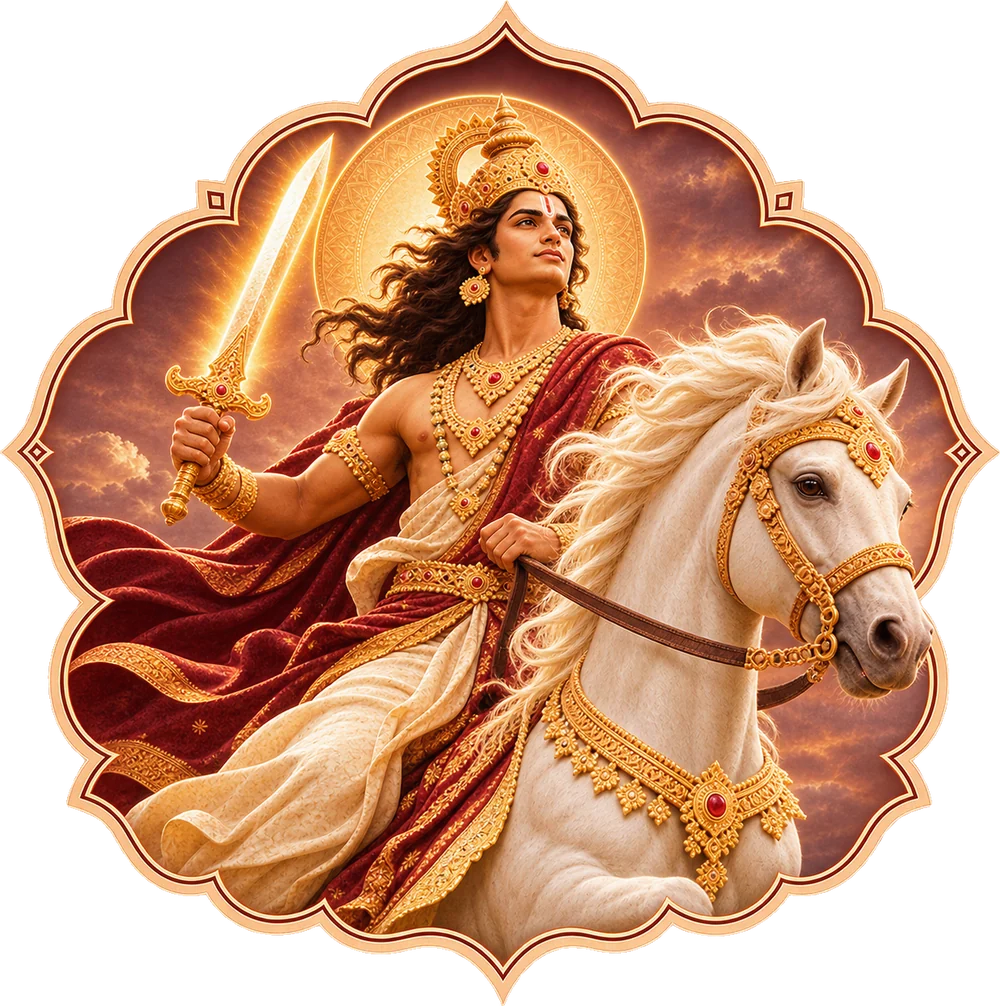
Kalki is the only avatar still to come. At the end of the Kali Yuga, our age, he appears on a white horse with a sword. He ends the time of decline, and a new golden age begins.
Why do the lists differ?
The list of ten is the best known, but not the only one. In its first book the Bhagavata Purana names 22 descents. They include the sage Kapila, the healer Dhanvantari and Vyasa, who arranged the Vedas. Other texts count even more and say the avatars are countless.
There are differences within the ten as well. In some lists, especially in South India, Balarama, Krishna's elder brother, stands ninth instead of the Buddha. In Gaudiya Vaishnavism Krishna counts as the source of all avatars and so does not stand in the series. Then Balarama moves up to eighth place.
Some modern writers read the order of the avatars as a picture of evolution, from fish to amphibian and mammal to human. This reading comes from the 19th and 20th centuries and is not in the old texts.
Avatars of Vishnu in practice and kirtan
Many Hindus worship one avatar as their personal deity. For some it is Rama, for others Krishna or Narasimha. The birthdays of the avatars of Vishnu are great festivals, above all Ram Navami and Janmashtami.
In kirtan the list is often sung as a song. Well known is the Dashavatara song from the Gita Govinda with the refrain jaya jagadīśa hare, “victory to you, lord of the world, Hari”. Each verse describes one avatar in a single image.
If you want to begin, first learn the ten names in the right order. Then read one story each day. After ten days you know the whole series, and many temple images will suddenly look familiar. You will find more gods in the overview Hindu gods.
Frequently asked questions
What are the 10 avatars of Vishnu called?
Matsya, Kurma, Varaha, Narasimha, Vamana, Parashurama, Rama, Krishna, Buddha and Kalki. Some lists put Balarama in place of the Buddha.
What does avatar mean?
Avatar comes from Sanskrit and means “descent”. It refers to God coming to earth in a particular form.
Which avatar is still to come?
Kalki, the tenth avatar. He is to appear on a white horse at the end of the Kali Yuga and begin a new age.
Is the Buddha an avatar of Vishnu?
In many Hindu lists, yes. Buddhists themselves do not see it that way, and some lists name Balarama instead of the Buddha.
Why does Vishnu come to earth as an avatar?
According to the Bhagavad Gita (4.7 to 4.8) he comes when dharma declines: to protect the good and restore order.