




Who is Chandra?
The word candra comes from the root cand, “to shine, to glow”. Chandra is described as a handsome young god who drives across the night sky in a chariot, drawn by white horses or an antelope.
He is one of the navagrahas, the nine heavenly bodies of Indian astrology. Monday, somavāra, is named after him. On this day many also worship Shiva.
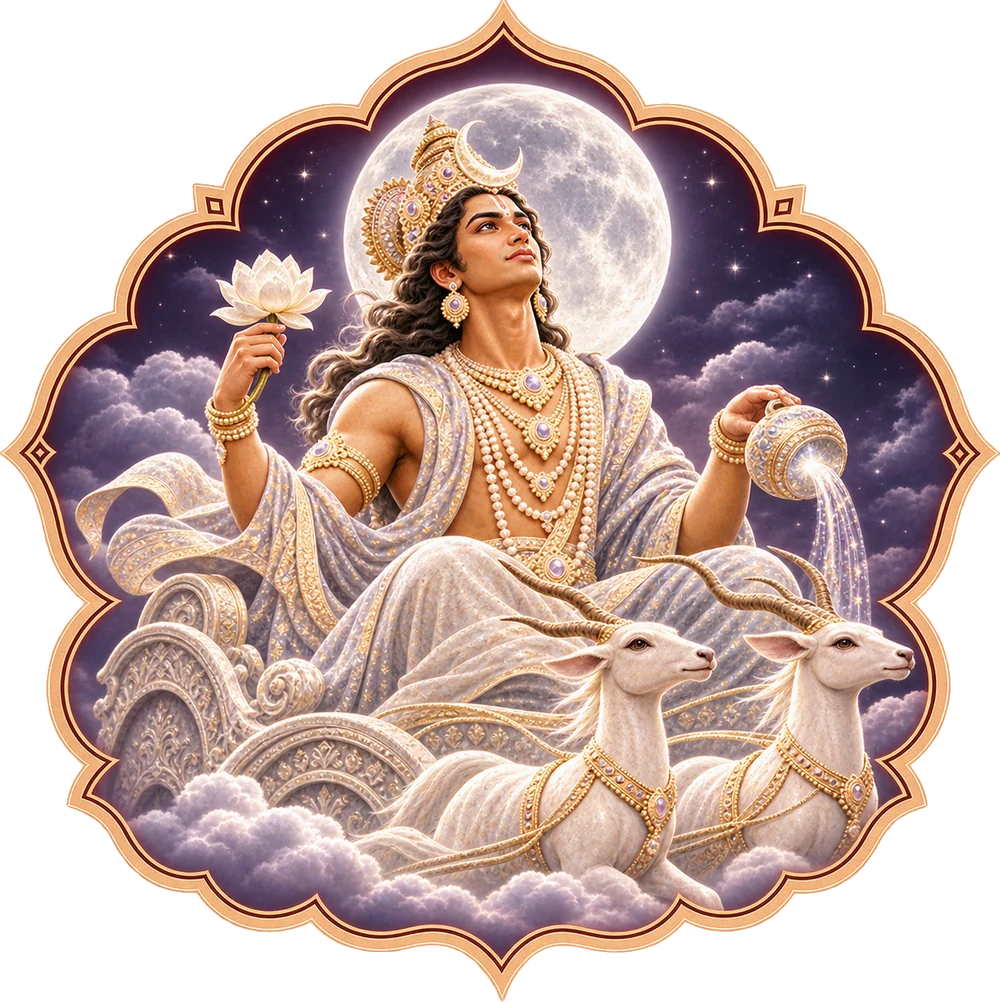
Chandra and soma
In the Rigveda soma is a sacred drink and at the same time a god. Later soma was identified with the moon: the moon is regarded as the cup from which the gods drink the nectar. That is why it wanes, and that is why it fills up again.
To this day Soma is a second name of the moon. Monday also bears this name, and many fasting days for Shiva fall on it.
Why the moon waxes and wanes
A well-known legend tells: Chandra married 27 daughters of Daksha, the 27 lunar mansions, the nakshatras. But he loved only one, Rohini. The others complained to their father, and Daksha cursed Chandra to waste away.
Chandra sought refuge with Shiva. Shiva softened the curse: the moon now wanes and grows again, in the alternation of the two lunar fortnights. And Shiva set the crescent moon in his hair. That is why Shiva is also called Chandrashekhara, “he who wears the moon as a crown”.
Another story tells how Chandra laughed at Ganesha and was cursed for it.
Chandra in the calendar
Because the Hindu calendar is a lunar calendar, almost all festivals depend on Chandra's course. Full moon and new moon, purnima and amavasya, are days for prayer and fasting.
More about the gods of nature is under the Vedic gods and in the Sanskrit glossary.
Frequently asked questions
Who is Chandra?
The moon as a deity. He is one of the nine navagrahas, lord of Monday and is identified with soma.
Why does Shiva wear a crescent moon?
According to legend Shiva saved Chandra from a curse and set the crescent in his hair. That is why he is called Chandrashekhara.
What is the difference between Chandra and Soma?
In the Rigveda soma was a sacred drink and god. Later soma was identified with the moon; today both names mean the same deity.